If you're buying diagnostic equipment for a clinic or lab, the lowest bid is almost never the lowest cost. I say that after six years and roughly $180,000 a year in equipment budgets as a procurement manager for an ambulatory care group with imaging and dental offices. We've bought lab analyzers, CT scanners, dental chairs, and point of care readers, and the pattern keeps repeating: the price on the quote is only the entrance fee.
When we compared Roche Diagnostics point of care instruments, I went through the official Roche Diagnostics shop to understand the SKUs. I didn't pick the cheapest reader. I picked the one that made results easier to move into the medical record. That decision saved us more staff time than the hardware discount would have.
Why Listen to a Cost Controller?
I'm not an engineer. I don't read a CT scan or interpret a dental x-ray. I'm the person who turns clinical requests into purchase orders and then explains why we went over budget. At a 120-person group, I've handled around 200 orders, give or take, negotiated with 20+ vendors, and documented every invoice in our cost tracking system. I've been wrong enough that I now check the service contract before I celebrate a savings.
Everything I'd read early on told me to get three quotes and take the lowest. My experience says otherwise. Vendor support and installed lifetime cost usually beat the sticker price. Put another way: a cheap device that sits in downtime isn't cheap.
Where the Money Actually Goes
Roche Diagnostics point of care: cost per result, not cost per box
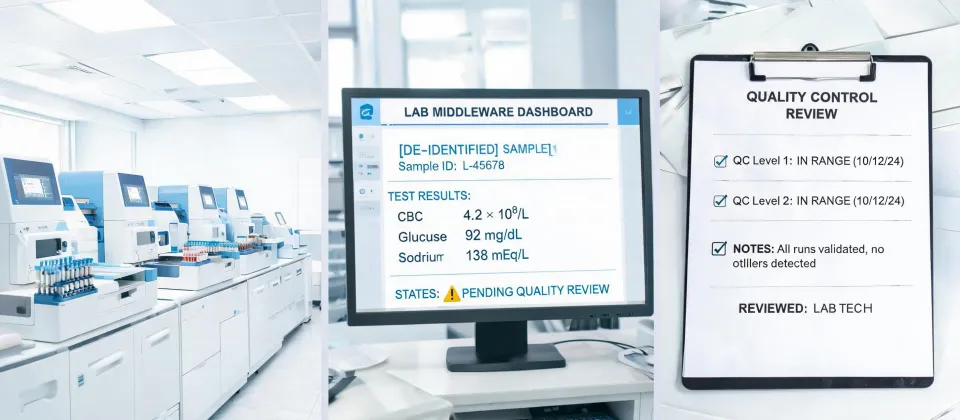
The hardware quotes for point of care analyzers were closer than I expected. The biggest difference was in the workflow. For our Roche Diagnostics point of care system, the official Roche Diagnostics shop showed separate SKUs for analyzers, reagents, and accessories. But the real line item was staff time doing manual entry when the interface wasn't configured. Once we added that to the total cost model, the option with better EMR integration came out ahead. As of our Q1 2025 evaluation, the integration support was the deciding factor. I should add that we also negotiated a year of remote support into the purchase. That hidden line item is worth more than the discount it replaced.
CT scanner: service response time is a budget item
A CT scanner can look like a bargain and then cost you weeks of lost revenue while a repair waits for parts. We evaluated a refurbished unit priced $42,000 below a new model. I almost signed. Then I read the service history and saw two 10-day downtimes in the previous year. Our volume couldn't survive that risk. The cheaper scanner would have cost us imaging slots and referrals. The new model came with a response-time guarantee in the maintenance contract, and that guarantee was worth more than the discount. Before buying any CT scanner, also check site readiness and ACR expectations around protocol and dose review. I'm not a physicist, so I won't quote the whole standard—just saying the cost of compliance is real.
Dental chair: my rookie mistake
In my first year, I bought a $3,100 dental chair instead of the $4,800 option the dentists recommended. I thought I was saving on markup. Then freight added $460, assembly added $350, and electrical work to prep the room added $270. Three months later, the pump failed. The warranty covered parts but not the three-week downtime, and the expedited repair cost $1,100. First-year total: roughly $5,280—and the chair still didn't have the controls the hygienists wanted. We replaced it within 36 months. That's how I learned that “cheap” equipment has a way of billing you later.
How Often Dental X-Rays Are Needed
If you're setting up a dental office, this question matters beyond clinical choice. X-ray frequency drives sensor wear, room shielding, software upgrades, staff training, and liability. Most non-clinical buyers assume annual x-rays are standard. That's not what the guidelines say.
According to the ADA/FDA recommendations for dental radiographs, a healthy adult with low caries risk and no active disease may only need posterior bitewing x-rays every 24–36 months. If there's active disease or an increased risk profile, that interval can drop to 6–18 months. The exact interval depends on clinical judgment, not a calendar.
As of our Q1 2025 review, that's still the framework I use for planning equipment. Don't hold me to every state's rules—some regulations and payer contracts are stricter. A high-volume pediatric practice will likely need more frequent imaging than a low-risk adult practice, which changes the type of dental x-ray equipment and the budget around it.
The Fine Print That Kills Projects
After 200+ orders, I've stopped trusting the phrase “included with purchase.” Now I put these questions in the contract:
- What exactly is included in installation? Some quotes are handoff at the receiving dock, not turnkey.
- How long does a service response actually take? 8 business hours is not the same as 8 hours.
- Are software updates included for the first year? For point of care systems, this should be explicit.
- What are the site requirements for a CT scanner? Electrical, shielding, and cooling can add thousands.
- Is assembly included for a dental chair? If not, budget 12–15% on top.
Where I Push Back on My Own Rule
Total cost thinking isn't for everything. If you're buying a low-cost consumable or a short-life accessory, the cheapest option can be fine. If you're evaluating new digital health technology, it's often smarter to pay more for training and flexible terms because the product will evolve. And I've made the opposite mistake too: I once delayed a $4,000 purchase by two months to compare vendors, and the extra analysis ate up the discount.
Honestly, I'm not sure why some practices still treat dental x-rays as an automatic annual line item. My best guess is habit. But the medical guidelines, and the equipment strategy around them, should be driven by patient risk. If a clinician tells you a patient needs x-rays, buy the right sensor and don't skimp on the mount. If the protocol says low-risk and 24–36 months, don't let a vendor sell you a faster replacement cycle than you need.
To be clear, no piece of diagnostic equipment replaces clinical judgment. The point of all this is to make sure critical decisions aren't overridden by a spreadsheet. But in my experience, a spreadsheet with the right total cost is exactly what keeps the clinic running and the doctors happy.
