Predictive Maintenance
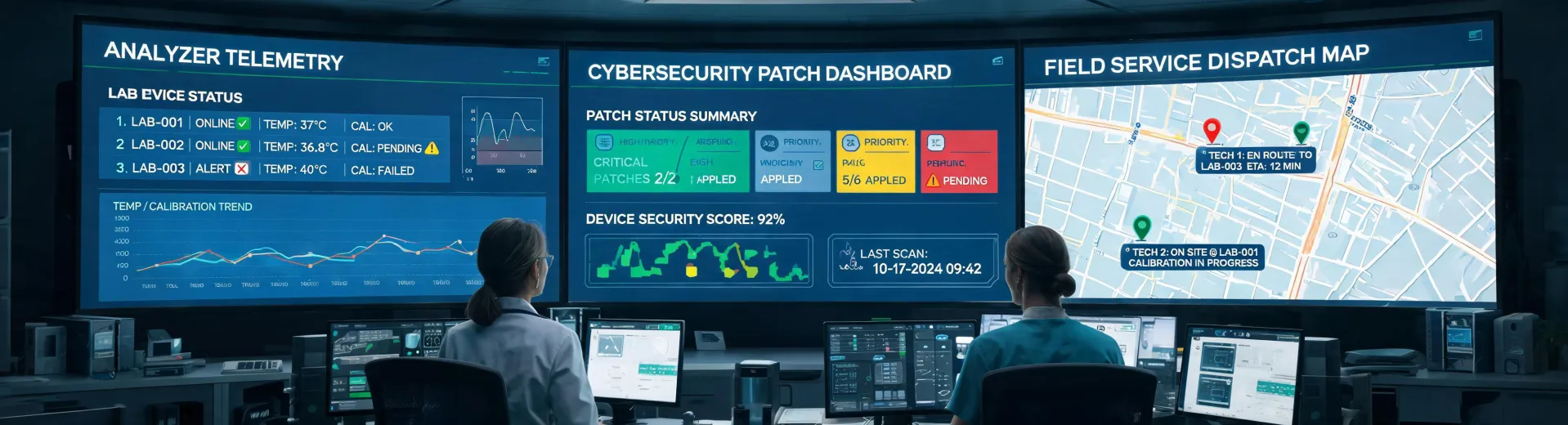
Analyzer telemetry, reagent compartment signals, calibration trends, and error code history are reviewed to forecast failures before they interrupt test turnaround time.
Roche Diagnostics service teams support regulated diagnostics programs with remote telemetry, analyzer maintenance planning, cybersecurity patch governance, and LIS middleware expertise. The service model starts before installation: implementation teams document order interfaces, result routing, operator training, QC rules, and escalation paths so a new analyzer or connected monitoring workflow can enter production without improvising around risk controls. For laboratories running high-volume chemistry, immunoassay, molecular, or point-of-care testing, service is treated as a clinical operations system rather than a repair event.
Each service pillar includes documentation that biomedical engineering, laboratory leadership, IT security, and value analysis teams can review together.
Analyzer telemetry, reagent compartment signals, calibration trends, and error code history are reviewed to forecast failures before they interrupt test turnaround time.
Patch lifecycle planning follows regulated software change control, IEC 62304 traceability, rollback readiness, and site-specific validation windows.
SBOM review, CVE triage, network segmentation advice, and coordinated disclosure workflows help protect connected laboratory assets.
Integration specialists support order routing, result observation delivery, interface testing, and message exception review for clinical IT teams.
Application specialists use KPI dashboards to tune sample loading, reflex rules, result review queues, and operator training plans.
Software retirement, data retention, version change logs, and post-market monitoring steps are planned before a platform transition.
These metrics are used as planning references, not universal guarantees. Every site requires local validation because uptime depends on analyzer age, reagent logistics, interface architecture, biomedical staffing, network policy, and the agreed service tier. Roche Diagnostics packages the assumptions behind each target so procurement teams can compare service proposals on evidence instead of headline promises.
Request a service audit for installed analyzers, middleware interfaces, cybersecurity patch cycles, training records, and escalation coverage. The review can be scoped for a single laboratory, a regional network, or a remote care fleet.
Request Service Audit