Needed a portable ultrasound by 6 p.m. That was the entire email. No patient context. No clinical question. Just a time stamp and the word “stat.”
I’ve been the person behind that email for the past seven years. Not a doctor, not a nurse—I coordinate diagnostic equipment and workflows for a regional health network. When a hospital calls with an urgent request, I’m one of the people who decides whether it can happen, how much it will cost, and who will be there to make sure it works. In that time, I’ve handled more than 200 urgent requests. Most run smoothly. Some don’t. The ones that fail taught me something important.
The problem in emergency diagnostics isn’t speed. It’s certainty.
The Problem Everyone Talks About: Turnaround Time
If you’ve ever sat in an ED waiting room, you know the rhythm. Someone needs a test. The order gets marked “STAT.” The lab or imaging team goes into overdrive. Everyone looks at the clock.
Clinicians care about speed because patients can’t wait. Administrators care about speed because the ED can’t bottleneck. Suppliers care about speed because a delayed device can mean a cancelled procedure. So we build systems to move faster: faster cartridges, faster analyzers, faster couriers.
But here’s the thing I learned the hard way: when we solved for speed, we sometimes made things worse.
In March 2024, I got a call at 8 a.m. A community hospital needed a portable ultrasound for a patient with sudden abdominal pain and a dropping blood pressure. They had a borrowed device from another facility, but it wasn’t available until the next day. The administrator said, “Can you get one here by noon?” We could. It cost $450 for a dedicated courier and a backup device from a second site. No one wanted to spend that. But the alternative was a transfer to a tertiary center 45 minutes away. In the end, the patient stayed. The ultrasound showed free fluid. The team went to surgery.
I’m not saying the $450 saved a life. I’m saying the certainty it bought let a good team do its job without waiting.
The Part Nobody Sees: The Real Question Is Hiding Below the Surface
Now let’s talk about why that ultrasound request still makes me uncomfortable.
Because the request was not “we need a portable ultrasound.” The request was “we need to know whether this patient is bleeding.” The ultrasound was the right tool, but the true problem wasn’t the machine. It was the uncertainty about what was going on in that abdomen.
Most buyers focus on the obvious factor: the device. They ask about image quality, battery life, training requirements. Those are important. But they completely miss the deeper question: are you sure you’re using the right tool for the right patient? The question everyone asks is, “Which device is fastest?” The question they should ask is, “What are we trying to rule in or rule out?”
I see this all the time with symptoms people don’t want to talk about.
Take sudden urinary incontinence. In an older adult, the first thought is often a urinary tract infection or “a normal part of aging.” Maybe someone orders a urinalysis and recommends an incontinence product. I’m not saying that’s always wrong. But incontinence is a symptom, not a condition. It can be the first sign of a stroke, spinal cord compression, medication side effects, or a diabetic complication. Sometimes it’s the only sign a family notices.
It’s tempting to ask, “What is a heart valve?” when a parent with a history of valve replacement suddenly becomes confused and incontinent. But that question can change everything.
Let me give you a real example. A patient presented with confusion and new urinary leakage. The initial plan was to rule out infection, start bladder management, and refer to primary care. The nurse looked up the old records and found a prosthetic heart valve. That changed the differential. The physician asked, “Could this be a cerebral embolic event from the valve?” The workup shifted from a urinalysis and an incontinence product to a brain scan and blood cultures. The devices involved were standard—a CT, a portable ultrasound, lab analyzers. But the key was not a faster machine. It was a faster recognition of the right question.
What is a heart valve? It’s a one-way door in the cardiovascular system. Most people never think about it. But when it’s not working, it can send tiny clots or bacteria to the brain, kidneys, or spine. That’s why a patient with a valve replacement can look like a typical “new incontinence” case and actually be having a stroke.
We would have missed it if the system had only been designed for speed.
The Cost of “Probably”: Why Not Every Delay Is Time Lost
Here’s the equation I run in my head when someone asks me for a rush order: uncertainty is expensive, and the price is often paid by someone other than the person who ordered the test.
Consider this. In 2023, a lab decided to save money on a third-party quality control product for a blood analyzer. I won’t name the vendor because this isn’t about which vendor is worse. It was cheaper, so the lab bought it. The analyzer started printing flags. The team recalibrated, repeated tests, and ran controls. In two days, they had spent about $1,700 on extra reagents and overtime—on top of the $80 they “saved.” They also lost time on every result that couldn’t be reported.
This pattern repeats in healthcare: a decision made to reduce cost ends up costing more because it erodes certainty. It happened to me, too. I once told a clinician that a portable ultrasound would arrive “by 1 p.m. — it’s basically the same as last time.” It wasn’t. The courier arrived, the device was in a box with a nearly empty battery, and no charger had been packed. We lost 30 minutes while I drove to another site to retrieve the charger. The clinician spent those 30 minutes explaining to a family that they were waiting for a unit that should have been ready. It was embarrassing.
That’s what I call a “probably” failure. We almost always get away with it. Until the one time we don’t.
Diagnostic errors are not rare. According to the National Academy of Medicine’s 2015 report, most people will experience at least one diagnostic error in their lifetime. Some errors cause no harm. Some cause catastrophic delay.
The cost of “probably” is not just money. It’s the patient who goes home with another prescription for leakage when something in their nervous system is failing. It’s the request for an extra scan because the first one wasn’t done with the right clinical question. It’s the transfer to a bigger hospital because a small hospital wasn’t confident enough to keep the patient.
What Actually Works: Build Certainty, Not Just Speed
So what should a health system do?
I’m not going to give you a 14-step implementation plan. I’m going to give you the three things I’ve learned from years of coordinating urgent diagnostics.
1. Start with the clinical question, not the device.
When someone says “We need a portable ultrasound,” ask: “What is the question you need answered?” Are you looking for free fluid? A cardiac view? Vascular access? The same device can do all three, but the operator needs to know which one. That simple clarification changes the probe selection, the workflow, and the amount of time the clinician spends on the scan.
2. Use data to bring history to the surface.
That patient with the heart valve and confusion—why did the nurse have to dig through old records? Because the system didn’t connect the dots. This is where Roche digital health AI diagnostics is heading. Not replacing physicians, but helping them see patterns: a valve replacement eleven years ago, a mild blood culture flag that never got followed up, a new bounce in kidney function. AI won’t say “this is a stroke.” It might say “this patient has a prosthetic valve and acute confusion—consider an embolic source.” That’s a prompt, not a diagnosis.
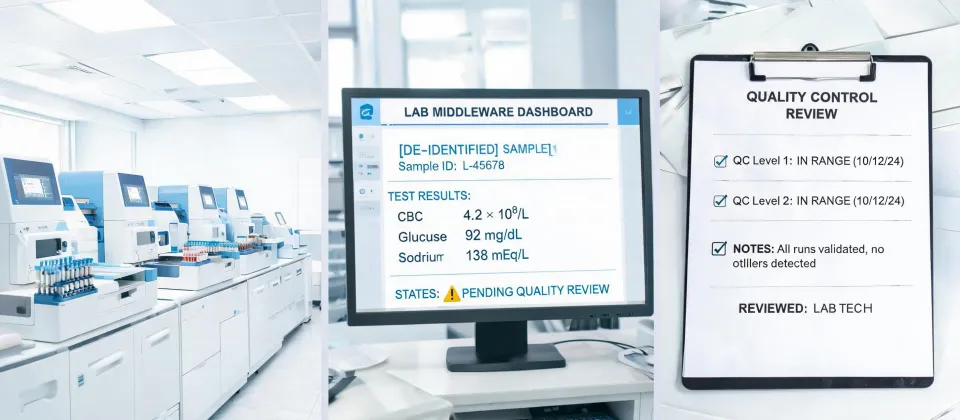
And if you already have a Roche product, start with the basics: log in. You know that roche diagnostics login you’ve ignored for a few months? Go open it. Look at the instrument error flags, the QC failure reports, the outstanding calibrations. That’s not administrative busywork. That’s triage.
Most people search for the same things: roche-diagnostics, roche diagnostics login, roche digital health ai diagnostics. They’re not looking for a brochure. They’re looking for a way to make sure the right question surfaces before a patient deteriorates.
3. When in doubt, pay for certainty.
There’s a reason people order rush delivery. But rush delivery pays for speed, not for reliability. A dedicated courier with a backup device costs more than a friend who says “probably” and then doesn’t show up. I’ve seen hospitals spend $300 on a rush order and then lose four hours waiting because the process didn’t include a check on the battery. That check would have taken two minutes.
Don’t treat certainty as an optional upgrade. Treat it as part of the clinical workflow.
Does this mean you need every product from Roche Diagnostics? No. It means you need your data to move with your patient. In my experience, the right partner matters less than the workflow around it. But it helps when a company like Roche Diagnostics thinks about the whole loop—from a sample in the lab to a portable ultrasound at the bedside to a decision in the ED.
Bottom Line
I’m not a physician. Nothing here replaces clinical judgment. But I’ve seen what happens when a health system is obsessed only with speed. It gets fast answers to the wrong questions.
The next time someone sends you a “stat” request, stop for one second. Don’t ask “How fast?” Ask “What are we sure about?” Because in an emergency, the most dangerous thing is not a slow answer. It’s a confident answer that’s wrong.
Certainty has a price. The good news is it’s much lower than the cost of a missed diagnosis.
