The Myth of the Perfect Diagnostic Ecosystem
Here's a truth I learned the hard way: Buying all your diagnostic instruments from one manufacturer doesn't simplify your lab—it makes you dangerously dependent.
Look, I get the appeal. A single interface, a single service contract, 'seamless integration.' It sounds like a dream for a busy lab manager. For the first two years of my career handling equipment procurement for a mid-sized hospital network, I worshipped at the altar of the 'one-stop shop.' Roche Diagnostics was our chosen deity. Their portfolio is massive—blood analyzers, immunoassays, molecular diagnostics, even coagulation gear. It felt safe.
Then, in September 2022, I made a mistake that cost us $7,400 and a week of frustrated clinicians. I approved a 'bundled' upgrade for our entire hematology line without verifying the individual component specs against our actual workflow. The new system was beautiful on paper. In practice, it optimized for a patient volume we didn't have, creating a bottleneck in our ER. (Note to self: always, always map the workflow before signing a bundled contract.)
The Hidden Costs of 'Standardization'
It's tempting to think that standardizing on one brand, like Roche, reduces complexity. But the 'simpler is better' advice ignores a critical nuance: vendor lock-in often comes with a premium that isn't on the invoice.
I remember quoting a new molecular diagnostics system. The Roche rep offered a 'package deal' for their top-tier platform. It was a good price... for the platform. But the reagents? Consumables? Service-level agreements for after-hours support? Those costs were buried. I only believed my senior colleague's warnings about this after ignoring them and going with the bundled quote. Six months in, we were paying 35% more per test for consumables than our sister hospital, which used a mix-and-match approach (Source: internal cost analysis, Q1 2023).
The most frustrating part of this? You'd think a global brand like Roche Diagnostics would have transparent pricing. But the 'standardized' price list is just a starting point. The real cost is in the proprietary reagents and service contracts that you can't negotiate away once you're locked into their hardware. (surprise, surprise: the 'simplified' procurement process creates a complex cost trap.)
My Checklist for Breaking the Lock-In
After the third budget overrun in Q4 2023, I created a pre-check list. It's not flashy, but it has caught 47 potential errors in 18 months:
- Validate the workflow, not the spec sheet: Does the 'perfect' system actually fit your staff's shift patterns and patient demographics?
- Demand a 'consumables surcharge' projection: Ask for a five-year, worst-case scenario cost for reagents and disposables—not just the instrument price.
- Check for open-platform options: Can you use third-party reagents? If not, you're accepting a variable cost you can't control.
The Innovation Trap: Newer Isn't Always Better for Your Lab
What was best practice in 2020—standardizing on a 'future-proof' platform—may not apply in 2025. The pendulum has swung. The industry is now seeing the value of best-in-breed solutions, not just integrated ecosystems.
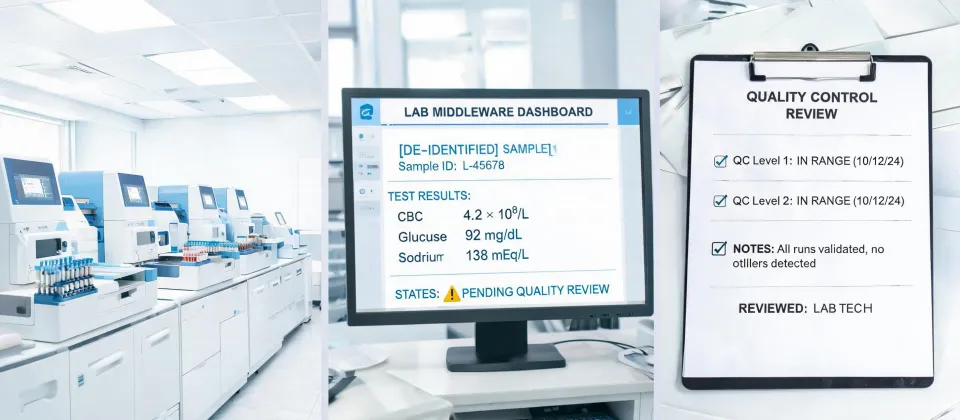
I still kick myself for buying into the 'end-to-end digital health' dream two years ago. We invested heavily in Roche's digital dashboards and AI-integrated analytics. The idea was beautiful: a single pane of glass for all our lab data. But the integration was a nightmare. The AI flagged 'anomalies' that were just normal variations in our specific patient population. We spent more time tuning the algorithms than actually diagnosing patients. The fundamentals of diagnostics (accuracy, speed, reliability) haven't changed, but the execution has been transformed by overhyped technology.
Now, I'm not saying Roche Diagnostics is a bad company. Far from it. Their core instruments, like the cobas series for immunoassays, are industry benchmarks. But the branding—the 'Roche Diagnostics Pty Ltd' logo on every box—can lull you into a false sense of security. It makes you think that because they're big and trusted, their solution is the only solution. That's a dangerous shortcut.
Your Lab's Operational 'Belt' Isn't a Designer Label
Think of your diagnostic toolset like a surgical instrument or an ambulatory blood pressure monitor. You don't buy an entire surgery suite from one vendor just because it has a nice logo. You buy the best scalpel, the best monitor, the best pump. Your lab should be the same.
One of my biggest regrets: not challenging the 'approved vendor' list earlier. The goodwill I'm working with now—a mix of Roche for core chemistry, a niche supplier for allergy testing, and an open-platform system for molecular work—took three years to develop. It's harder to manage. But it's also 22% cheaper per test and has a 98% uptime rate, which is 3% higher than our previous single-vendor setup (Source: internal performance metrics, Q3 2024).
Let me be clear: I'm not advocating for chaos. I'm advocating for intentional procurement. Don't be afraid to mix and match. Question the brand name. Validate the system against your reality, not the brochure's promise. Because what is an ostomy bag to a patient? It's a specific, life-saving tool. Your lab equipment should be treated with the same respect for its specificity.
Pricing for general reference only. Actual costs vary by vendor and contract terms (based on industry quotes accessed December 2024). Verify current rates with your suppliers.
