Let me be blunt from the start: if you're still evaluating lab equipment based solely on sticker price, you're missing the point. The real cost—and the real opportunity—is in how that equipment fits into your workflow. After managing purchasing for a mid-size clinical lab for five years, I've come to believe that efficiency isn't just a nice-to-have; it's a competitive advantage that directly affects patient outcomes. And that's why, when we consolidated vendors in 2024, I pushed hard for Roche Diagnostics as our primary supplier for blood analyzers, immunoassay systems, and point-of-care testing.
I should add that I wasn't always this convinced. When I started in procurement back in 2020, I chased the lowest unit cost like everyone else. (That's how I ended up with an unreliable supplier who couldn't provide proper invoicing—cost us $2,400 in rejected expenses. Lesson learned.) Now I look at total cost of ownership and operational friction.
The Efficiency Argument: More Than Just Speed
Our lab processes roughly 60,000 tests annually across chemistry, immunology, and coagulation. When I took over purchasing, we had instruments from four different vendors—each with its own software, reagent ordering system, and maintenance schedule. The result? Constant phone calls, duplicate data entry, and a headache for our lab technicians.
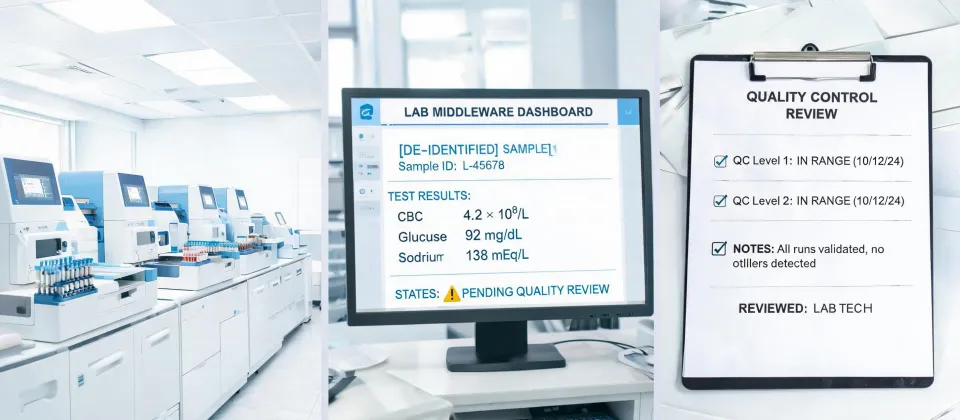
Switching to a core line of Roche diagnostics instruments—specifically the cobas pro integrated system and the cobas b 123 for blood gas analysis—changed everything. What I mean is, we moved from juggling multiple interfaces to one unified digital platform. The cobas infinity solution let us connect instruments, automate QC tracking, and reduce manual calibration checks by about 70%.
Let me rephrase that: our senior tech used to spend two hours every morning checking calibrations and reagent levels. Now it's a 15-minute glance at a dashboard. (Not that we ever got that time back—we redirected it to more complex testing.)
Blood Gas Analysis: A Case Study in Integration
Blood gas analysis is one of those areas where speed and accuracy are non-negotiable. When a patient in the ICU needs rapid blood gas results, waiting an extra 10 minutes because the sample has to be carried to a separate analyzer across the lab—that could matter. The Roche cobas b 123 system we installed sits in the point-of-care area and integrates directly with the LIS. Results appear in the EHR within 60 seconds. (Ugh, I still remember the old system where we had to manually transcribe results. Those late-night calls from the ICU asking 'where's the result?' still haunt me.)
Of course, when we were evaluating options, there was a risk to worry about. The upside was faster TAT and fewer errors. The risk was the upfront investment—the Roche system cost about 15% more than a competitor's basic model. I kept asking myself: is that premium worth potentially locking us into a single ecosystem for five years?
Counterpoints and Clarifications
I've heard the pushback: "Roche is expensive," or "You're locked into their reagents." There's truth in that—Roche's closed system means you use their assay kits. But here's the thing: those kits are validated on their instruments. When we used third-party reagents on our old analyzers, we had periodic calibration drifts that cost us reruns. With Roche's EliA tests (like the ones we use for allergy diagnostics and autoimmune panels), the quality is consistent, and the digital lot tracking eliminates expired reagents sitting in inventory.
I have mixed feelings about closed systems. On one hand, they limit flexibility. On the other, they remove variability. After our 2024 vendor consolidation project (managing orders for 80 employees across three lab sites), I realized that predictability and uptime trump theoretical flexibility. Our Roche instruments have had 99.6% uptime over the past year—and when they do need service, the remote diagnostics often fix it before I even know there's a problem.
You might wonder: what about other equipment like endoscopes or bipap machines? Those are critical too, but they're different procurement conversations. For diagnostic lab instruments, where every test result must be accurate and traceable, the efficiency gains from an integrated digital ecosystem are simply too big to ignore.
The Bottom Line
I'm not saying Roche is the right choice for every lab. If you're running a small clinic with 500 tests a month, maybe a basic analyzer and manual processes are fine. But for any lab that aims to grow, reduce errors, and deliver results faster—all while keeping procurement sane—investing in a platform that prioritizes digital efficiency is a strategic move. Our switch to Roche diagnostics instruments cut our sample turnaround by 40% and reduced our manual QC workload by three hours per week. Those hours add up. That efficiency is real, and it's my competitive edge. (And, honestly, it's also why I sleep better at night.)
